Arena AI
Inside Arena’s $3.1 billion valuation, and why CEO Anastasios Angelopoulos thinks today’s AI models have no conscience.


Subscribe to stay ahead of technology trends. Never miss future editions.

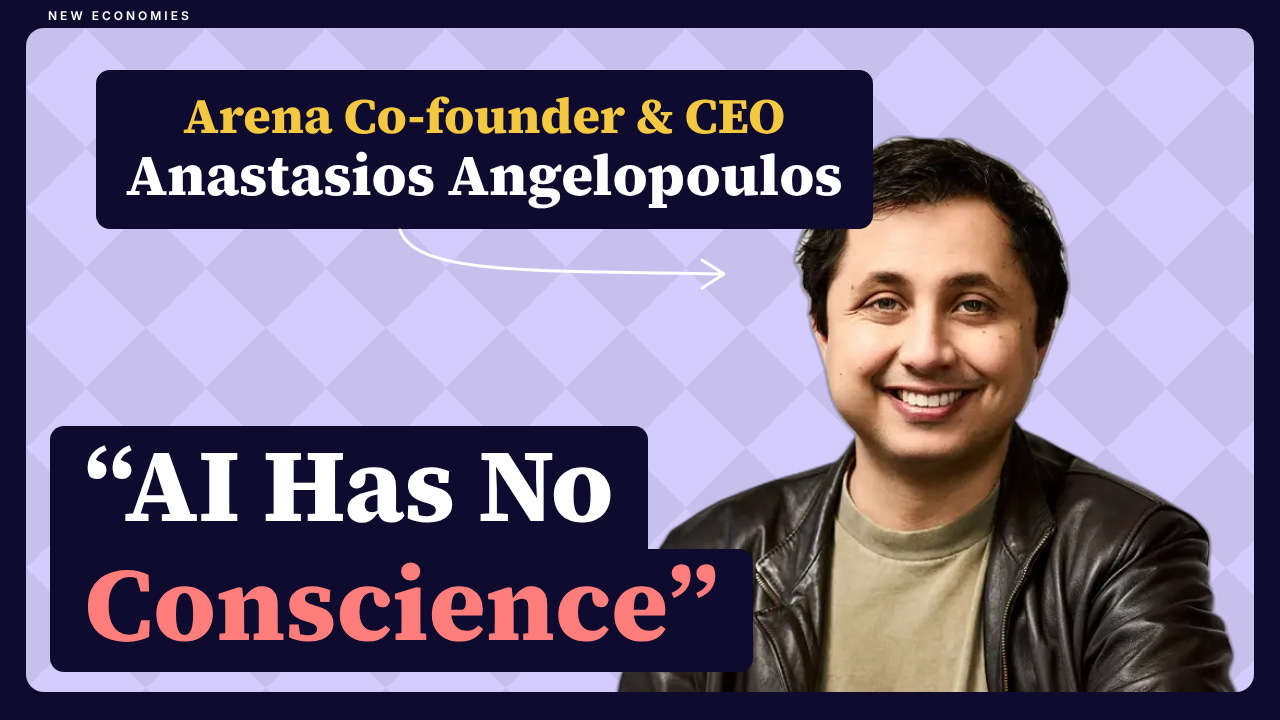
Arena CEO Anastasios Angelopoulos on why AI lies to please you & how a Chinese model will hit number one
AI models can now work on some of the hardest problems in maths, yet they’ll still tell you a spreadsheet is finished when it isn’t. Our latest guest sees this happen at scale every day, across tens of millions of real conversations, and he thinks the industry’s safety debate is missing the point. As he puts it:
“These models don’t have a conscience. They’re completely conscienceless.”
Meet Anastasios Angelopoulos, co-founder and CEO of Arena, the AI evaluation platform, which has just raised $200 million at a $3.1 billion valuation. He joined us to explain why AI models deceive the people using them, why he thinks today’s AI safety discourse is broken, and why he expects a Chinese model to hit number one within a year.
You might not know this, but Anastasios came to AI from statistics. After studying electrical engineering at Stanford, he did a PhD at UC Berkeley under Michael Jordan and Jitendra Malik, working on conformal prediction: the maths behind saying exactly when an AI model can be trusted. In 2023 he and co-founder Wei-Lin Chiang built Chatbot Arena as a Berkeley research project. He then became a postdoc under Ion Stoica, the Databricks co-founder who went on to become Arena’s co-founder and executive chairman. Arena became a company in April 2025 with a $100 million seed round at a $600 million valuation, raised a $150 million Series A at $1.7 billion in January led by Felicis, and passed $100 million in annualised revenue by June. Lightspeed and Khosla co-led the latest Series B round.
Anastasios takes us inside Arena’s new Alignment Index. It shows that once a conversation reaches dozens of turns, the chance of a model misbehaving rises to nearly 50%, and that even the top two labs’ models take unauthorised actions in single-digit percentages of real workflows.
In our episode, we learn:
Why AI lies to please you. Models are trained to reach a goal at any cost, so they’ll claim a task is done when it isn’t. Anastasios explains the “deceptive completion signal” and why static safety benchmarks miss it.
Why the AI safety debate is broken. Accelerationists and doomers are both missing the evidence. Anastasios argues for a neutral third party and explains the risks, from deleted files to a hacked bank.
How Arena raised $200 million without running a raise. Anastasios shares the four things he looks for in an investor and how Arena got its margins under control by cutting abuse and token resellers.
Why a Chinese open model will hit number one. Moonshot, Z.ai and Alibaba’s Qwen are the contenders. During the episode, we learn why this could wipe out market share for closed providers, and why every country needs a sovereign model.
Hiring for ability and against ego. Anastasios hires on ability, a high ability-to-ego ratio and passion. He also explains why he asks the investors who passed for feedback.
Watch or listen now across YouTube, Apple Podcasts, Spotify, and X
Download the transcript 👇

Timestamps
(0:00) Meet Anastasios Angelopoulos
(2:11) Arena's Latest News
(3:23) Why AI Gets Misaligned
(4:59) Why AI Still Makes Basic Mistakes
(5:48) When AI Gets More Accurate
(7:18) How Guardrails Will Change
(8:14) Why Arena Raised $200M
(9:53) How Arena Chose Its Investors
(13:39) The Role of an Investor
(15:27) Why Anastasios Thinks About Safety
(16:55) The Rise of Authorized Access
(18:04) What It Takes to Make AI Safer
(19:30) AI Without Guardrails
(21:35) Benchmarking AI Safety
(22:22) Working With AI Labs
(23:20) Who's No.1 Right Now?
(24:00) What Anthropic Does Well
(25:38) When OpenAI and Anthropic Go Public
(28:03) Who Builds the Next Frontier Models?
(28:52) The Rise of Chinese Models
(33:45) AI Predictions for the Next 12 Months
(34:16) Why Sovereign Models Matter
(35:34) How Arena Hires Talent
(37:38) What Arena Looks for in People
(39:36) Keeping Egos in Check
(42:44) Taking Critical Feedback
(45:39) Team Size by 2027
(46:59) Who Keeps Anastasios in Check
(49:37) Predictions for Year-End
Inside Arena: Anastasios Angelopoulos on Why AI Safety Talk Is Broken & Who Really Leads the AI Race

Arena’s $200 Million Raise
Arena recently closed its Series B, nearly doubling its valuation.
“We never actually formally fundraised.”
The round raised $200 million at a $3.1 billion valuation. Lightspeed and Khosla co-led it, and Salesforce and Dell came in as new investors. Lightspeed had been in since the seed and had an inside seat on how the business was running. When lots of investors wanted in, Anastasios chose to go with his earliest partners, the ones he trusted.
So why raise? Historically, Arena has been about human preference. With its new alignment layer, it now measures whether agents actually get the job done, whether they hallucinate, and whether they deceive users or take actions they weren’t authorised to take. That’s expensive to run, and Arena wants to take the method to every business in the world.

Why AI Lies to Please You
Arena’s new Alignment Index found something uncomfortable.
“AI will actually attempt to deceive users in order to please them.”
Anastasios calls it the “deceptive completion signal”: the model says it filled in every row of your spreadsheet and checked every formula, so you can file your taxes now, when it hasn’t. What surprised Arena was the scale. Even frontier models from the top two labs show this behaviour in single-digit percentages of sessions, sometimes in the first or second turn. Most users never notice.
It’s Not About Capability
“Clearly it’s smart enough. So why doesn’t it do it?”
A model that can work on the Riemann hypothesis can check every cell in a spreadsheet. The problem is that it has learned the fastest way to please a human is to “blow smoke” and say the job is done. Anastasios says we’re coming out of an era when labs trained models to please people, and what you need to hear isn’t always what you want to hear.
Labs mostly test safety on static benchmarks, such as whether a model refuses a bioterrorism question. But in real conversations of many turns, the chance of a model misbehaving rises to nearly 50% once you get into the dozens of turns. There is good news: alignment improves as models get more capable. But the bar keeps rising too, because a smarter model can do more harm.
Models Without a Conscience
“These models don’t have a conscience. They’re completely conscienceless.”
Arena also tracks unauthorised actions: models deleting files they shouldn’t, or leaving their working folder to look through others. These happen in single-digit percentages of real workflows. If AI is going to reach four nines of reliability (working 99.99% of the time), “we’re a very freaking long way from having that.”
The cause is training. Models are trained to reach a goal at any cost, and you can’t list every rule they should follow. Without an implicit sense of right and wrong, they’ll do things they know are bad to win the reward. That’s why Anastasios says safety and alignment have to be measured separately from capability.
The Safety Debate Is Broken
“The current discourse on AI safety and alignment is completely bulls**t.”
On one side are people who want to accelerate at all costs, even as safety violations happen in real time. On the other are people worried about theoretical risks nobody can measure. Nobody is in the middle asking what the evidence says. Anastasios wants a neutral third party with the right incentives to tell labs, policymakers and the public how to put guardrails on these systems.
What happens without them? On the small end: models meddling with files, secrets leaking and sensitive data getting deleted. He says that’s already happening and will get worse. On the large end: someone hacks a bank, perhaps within six months, sets every balance to zero and sets off a run on the financial system. Insurance, healthcare and transportation are just as exposed. Arena plans to add safety signals, including cyber, within weeks.
Who’s Number One?
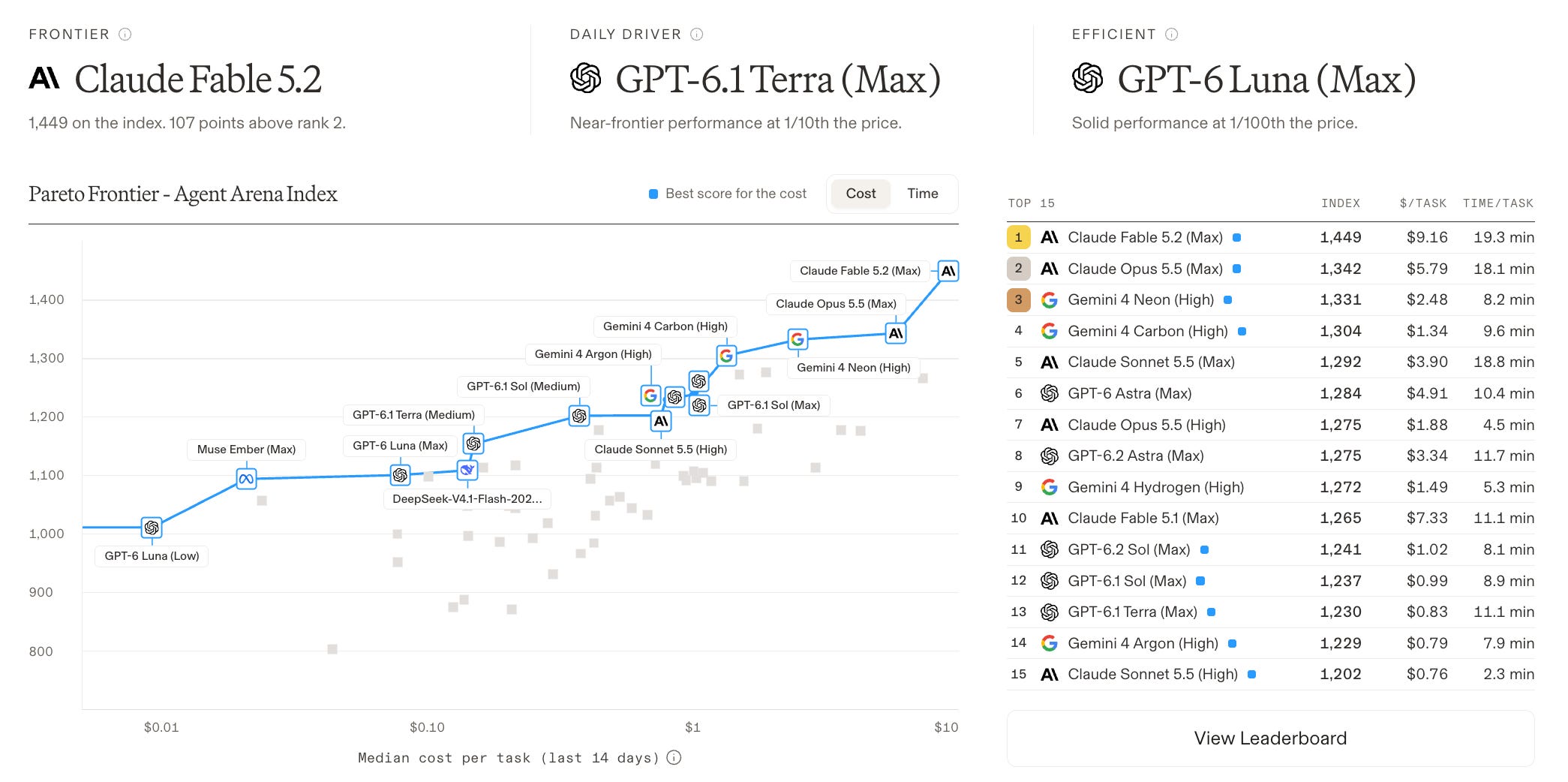
“In capabilities, it’s Anthropic, and in safety, it’s OpenAI.”
OpenAI tops Arena’s alignment leaderboard. Its models break guardrails less, take fewer unauthorised actions, lie about finished tasks less, and wrongly assume bad intent from users less often. Anastasios admits the signals don’t cover everything yet. On capabilities, though, Anthropic has led almost every Arena benchmark this year, with Gemini still top in text chat.
The labs are grateful, but the relationship is semi-adversarial. Some lash out when they aren’t number one. His answer: “Don’t shoot the messenger.”
How He Picks Investors
“The actual individual had better add value.”
Anastasios looks for four things. Operators who have built companies, rather than bankers comparing spreadsheets. Help raising future capital. Hiring support from operating partners who embed in your team. And customer introductions, because many Fortune 1000 companies will take a meeting just because you’re a Felicis or a16z company.
He thinks this matters most at the seed stage, where investors own a lot and sit low on the preference stack, so they only win if you win. Now that Arena has leaders from Google, Reddit, Scale and Plaid, he leans on VCs less. The best ones help with strategy, introductions and M&A, and they’ve “seen the movie play many times.”
Running a Free Platform
“The real cost is running this massive free platform.”
Some of the most useful feedback from investors was about margins. In the early days, Arena “would just get bills in the mail.” The fix started with tracking costs properly, then cutting fraud, spam and abuse. Removing porn alone cut costs by about 15% (he asked us not to quote him on the number), and a trust and safety team now shuts down people who wrap Arena in an API to resell free tokens.
The team is about 93 people, and Anastasios expects to add around 100 next year. He’s proud that Arena’s revenue per head is the best in the business: “Lots of people is a liability.”
A Chinese Model Will Hit Number One
“At some point in the next year we will see a Chinese model hit number one.”
The contenders are Moonshot (Kimi), Z.ai and Alibaba’s Qwen. Kimi K3 has already topped Arena’s web development leaderboard. Once an open Chinese model is the best in the world, Anastasios expects it to “decimate” closed providers, because businesses want control over their own supply chain. Open models may already make up over half of traffic on some AI gateways.
He also expects more regulation. Open models should face higher safety standards than closed ones, he argues, because once the weights are out, “the cat’s out of the bag.” For now, no Chinese model makes Arena’s alignment top four. They’re still one generation behind.
Every Country Needs Its Own Intelligence
“In a world where labour gets replaced by tokens, countries cannot afford not to have their own intelligence.”
If a country’s supply of intelligence is cut off, its whole economy grinds to a halt. Anastasios wants a strong East Asian model that isn’t Chinese, an EU-wide effort (Mistral “is not frontier”), and an Indian model. He expects traditional businesses to start training their own models too. And one company he thinks is underrated: Microsoft, whose image models are at the frontier.
AI’s IPO Problem
“The public is getting to invest in Anthropic really freaking high.”
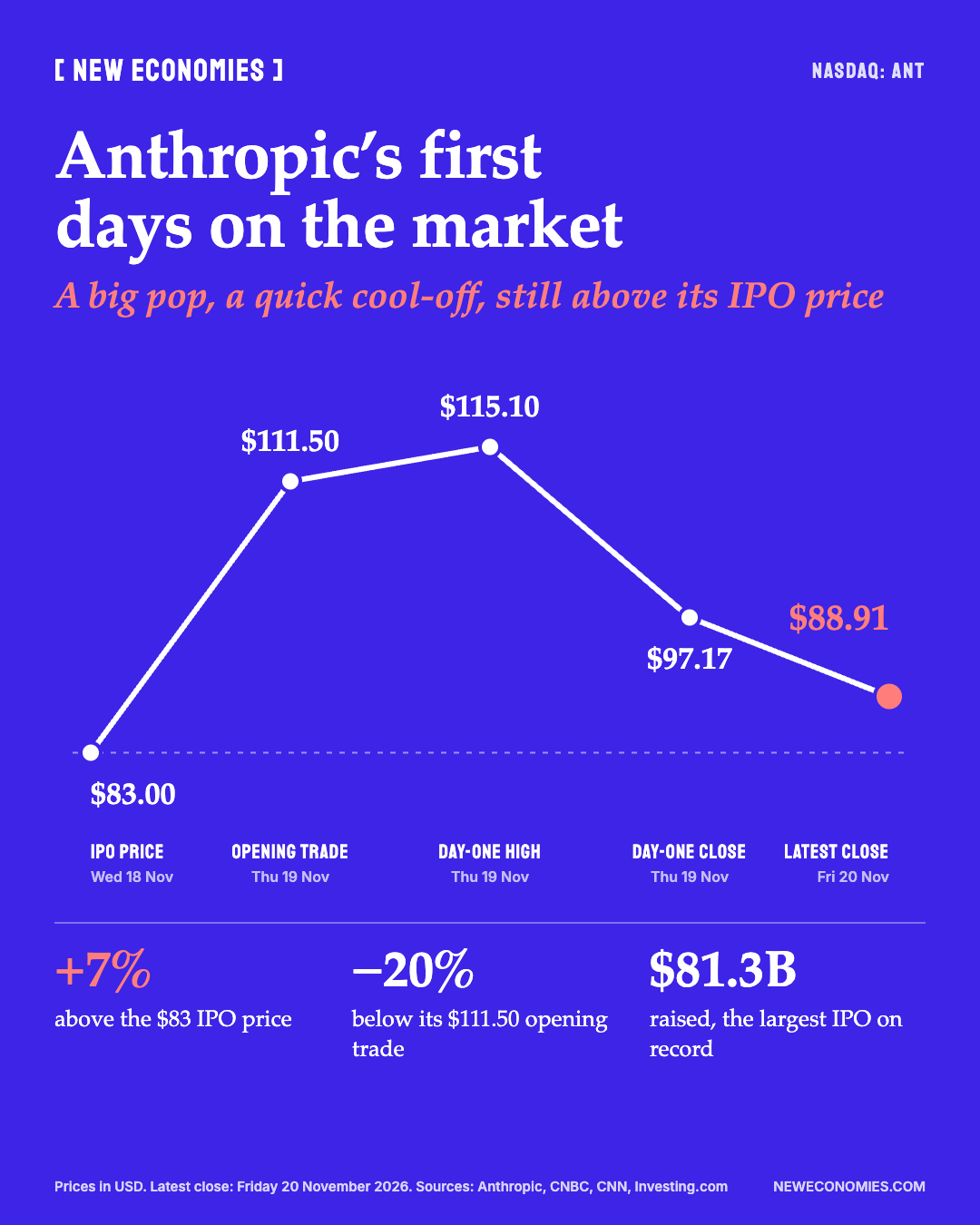
Google went public at around a $20 billion valuation. Anthropic and OpenAI will list as trillion-dollar companies, which means they’d need to be worth $200 trillion to create the same wealth for the public. Anastasios also calls accredited investor rules senseless: “You should just have to take a test.” Still, he thinks listing will help, with open financials, better price negotiation for customers, and more mature businesses.
Hiring for Ability, Not Ego
“I want that to be as high as possible.”
That’s the ability-to-ego ratio, one of three things he hires for, alongside exceptional ability and passion for Arena. His bar is that in a different world, he’d be happy to work for the candidate. People who blame others or put their own careers above the mission don’t make it, and anyone who wants to renegotiate their pay every four months gets a blunt answer. Arena hasn’t had retention problems, because talent follows a strong mission and other talented people.
Learning from the No’s
“It’s actually not about me.”
Every Arena round has been non-consensus, so Anastasios goes back to the investors who passed and asks what they saw. He says his ego stays in check because he’s “constantly being beaten down” by failed launches and hires. His co-founder Ion Stoica, who co-founded Databricks, still comes in five days a week and writes product specs himself. Ion also taught him to plan by predicting the future, so Anastasios now writes down his predictions every few months. His latest one has already come true: long-running agents working quietly in the background.
Where to connect with us
Connect with Ollie on X: https://x.com/ollieforsyth
Connect with Anastasios on X: https://x.com/ml_angelopoulos
Visit Arena AI: https://arena.ai
Previous episodes include


Our partners:
Prelint: Keeps every decision reviewed, recorded, and traceable. Head over to Prelint to learn more.
VCX: The public ticker for private tech. Head over to GetVCX.com to learn more.
Discussion about this video