Subscribe to stay ahead of technology trends. Never miss future editions.

Former Yahoo CEO launches Dazzle
Two to three years ago, the AI boom was almost entirely a story about the enterprise: coding agents, productivity gains and automated workflows. Today, as one of our recent podcast guests put it, the real question is how AI can “help humans become even more human.”
Meet Marissa Mayer, founder and CEO of Dazzle. She joined us to explain why the AI boom is shifting from enterprise to consumer, why your camera roll may be the richest asset a personal assistant could ask for, and what it takes to build an AI agent people will trust with their most personal data.
You might not know this, but Marissa joined Google when it had just 20 people and spent 13 years there, shaping some of its most iconic consumer products, including the famously simple search homepage. She then spent five years as CEO of Yahoo before returning to her product roots as a founder. Her previous startup worked on photo sharing, which led to the insight behind Dazzle: 40% to 50% of people’s camera rolls aren’t shareworthy at all. They’re screenshots of things to buy, photos of things to fix and appointment cards to remember.
Dazzle raised an $8M seed round last October led by Kirsten Green at Forerunner, with Kleiner Perkins and Greycroft also participating.
In our episode, we learn:
Why AI went to B2B first, why consumer AI has been “incredibly underinvested in,” and why Marissa thinks consumer AI could be three to five times bigger than enterprise by 2030
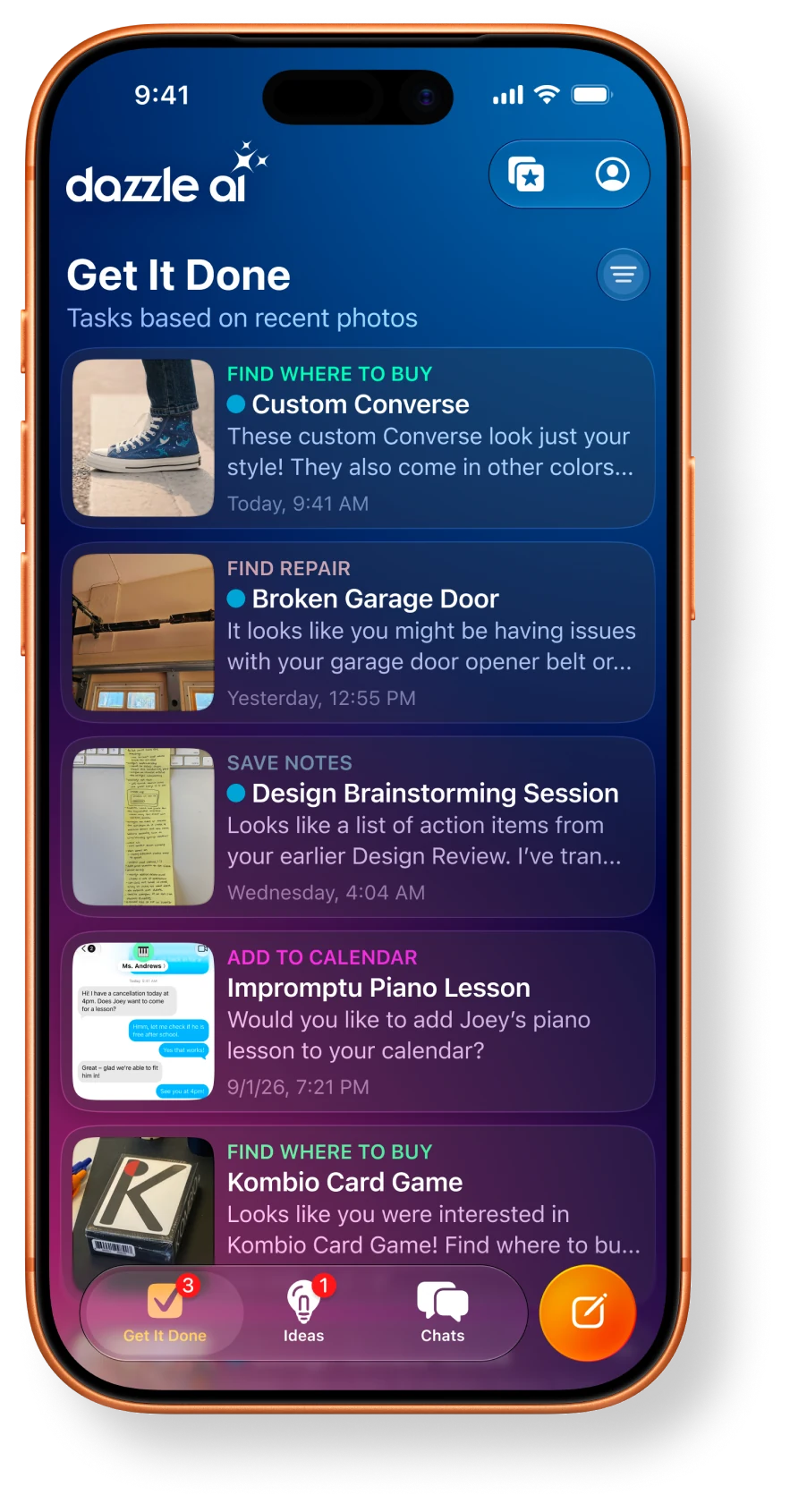
Inside Dazzle’s two engines: a context layer built from your historical photos, and an “intent engine” that asks why you took each new photo. That turns your camera button into a “Get It Done” button that books restaurants, fixes garage doors and even hires a roofer
Why Dazzle keeps humans in the loop: dollar-value thresholds, the “time expectation” test, giving your assistant its own credit card and phone number, and a “when in doubt, leave it out” approach to privacy
How Marissa built her seed round: why Kirsten Green was top of her list, why she kept the investor group small, and why falling token costs and new models matter for compute-heavy consumer AI
What comes next: why going fully headless won’t work, “multiplayer” agents coordinating with friends’ and family’s assistants within the next year, and why product taste matters more than ever when “hard and long” are no longer the constraints
Watch or listen now across YouTube, Apple Podcasts, Spotify, and X
Download the transcript 👇

Timestamps
(0:00) Meet Marissa Mayer
(2:17) Why are personal assistants exploding?
(3:19) Are assistants good for the ecosystem?
(6:05) Why Marissa wanted to be a founder
(9:08) From mega CEO to founder
(12:17) What is Dazzle?
(15:32) Why photos beat text
(18:05) How does Dazzle work?
(22:31) Dazzle already buys for users
(28:05) Personalizing experiences
(30:16) How Dazzle works with vendors
(39:10) Raising $8M
(41:51) Will compute costs come down?
(45:08) When will agents buy for us?
(46:57) Building trust with users
(49:12) Dazzle 12 months out
(51:02) The craziest concept for Dazzle
(52:36) How far away is multiplayer?
(54:37) Hardware: what would Dazzle build?
(55:03) How Marissa’s boards think about AI
(56:36) AI’s current inflection point
Inside Dazzle, Marissa Mayer’s $8M Bet That Your Camera Roll Is a To-Do List
40% to 50% of Your Photos Aren’t Memories. They’re Instructions.
Dazzle is a proactive personal AI assistant that learns who you are from your camera roll. It was founded by Marissa Mayer, who interviewed at Google when it had seven people, joined when it had 20, spent 13 years there and then five as CEO of Yahoo. Users can text Dazzle over iMessage, use the website or download the app, which reads the photos they choose to share.
Dazzle raised an $8M seed round last October, led by Kirsten Green at Forerunner, with Kleiner Perkins and Greycroft also in the round. After months of testing with hundreds of users, the product launched publicly the week of our interview. It is already buying products, booking travel and restaurants, and hiring contractors for its users.



Why Consumer AI Got Left Behind
Marissa says AI went to the enterprise and B2B first, and the reason is partly linguistic. When people hear “AI,” they think of automating processes, which is a business frame.
“People don’t think about how do I automate the processes in my house or in my morning routine.”
She believes consumer AI needs a softer, more personal lens, one that helps people do more of what they already enjoy.
“How can you take AI and help humans become even more human?”
She thinks consumer AI has been badly underinvested in. By 2030, she expects it to be three to five times bigger than enterprise AI.
From Shareworthy to “Get It Done”
Dazzle grew out of Marissa’s previous startup, which was building an AI model to predict which photos people would want to share. When the team analyzed the results, 40% to 50% of people’s camera rolls weren’t shareworthy at all. They were photos of things to fix, screenshots of things to buy and appointment cards from the doctor.
“There’s essentially instructions that could be good instructions for a personal assistant that are getting written down to your camera roll.”
Dazzle’s motto is “pictures, not prompts.” Marissa borrows from the Transformers paper, “Attention Is All You Need”: your camera roll is a record of what you turned your attention to, and you cared enough to press the button.
“Dazzle takes your camera button and turns it into a Get It Done button.”
A Context Layer and an Intent Engine
Dazzle splits the work in two.
The context layer: Dazzle builds this from photos a month or more old. It captures the people and places that matter to you, your aesthetics, the brands you surround yourself with, whether you have pets, and more.
The intent engine: this watches new photos and asks why you took each one today, and whether Dazzle can help.
The context shows up in the answers. When Marissa asked what her daughter should do on a day off school, Dazzle suggested the Misdirection magic shop in San Francisco, where the owner teaches a trick with every purchase. It suggested bringing her best friend, whose name it had learned from photos. When Marissa’s mother pushed back on Dazzle’s recommendation of shorter skis, it explained that she is shorter and slighter in frame than her friends.
“It often observes things about you that you might not even observe about yourself.”
Every day, a “Daily Dazzle” email puts the photos you took that day at the top, with what Dazzle thinks you need to do about each one.
Already Buying, Booking and Fixing
One super-user re-roofed his house through Dazzle: it gathered quotes, he picked one and Dazzle hired the roofer. Dazzle’s CTO photographed a fraying garage door belt and had an on-site repair within 24 hours.
Much of the value is administrative rather than transactional:
Dance studio closures: Marissa photographed the closure flyer and Dazzle added every date to her calendar.
School snacks: a snapshot of a snack sign-up sheet became an October 16th reminder, because Dazzle recognized her daughter’s name.
Food pickup: a handwritten “pick up at 5:30” on a catering order became a reminder when she was 10 minutes from the restaurant.
Gate codes: a screenshotted Airbnb gate code triggered a prompt to send it to her mom.
“A personal assistant’s fundamental job is just to make sure that your life is smooth.”
Travel is where the difference shows most. Marissa’s family now talks about “pre-Dazzle” and “post-Dazzle” trips. In Italy, Dazzle knew her kids loved escape rooms and booked a puzzle-based city tour. It also found an off-the-beaten-path mask-making shop. “Same dollars spent,” she says, but more personal.

Why Headless Isn’t Enough
Marissa thinks texting is a great low-commitment way to try an assistant, but not a complete interface. Her super-user had four or five projects running at once, which became confusing in a single iMessage thread.
“It’s why Slack has channels. It’s why email has threads with different subjects.”
She also argues that an assistant shouldn’t impersonate you. Instead of borrowing your credentials, it should have its own credit card, phone number, email address, iMessage account and computer.
Humans in the Loop and a Dollar Threshold
Dazzle runs almost everything through agents, but hands off to human customer experience specialists in two cases:
The job is too hard for an agent: for example, calling a small bike shop to verify 15 details about the last bicycle of that size and color in the country.
The purchase crosses a dollar threshold.
The rule weighs time against money. A $5 Americano ordered three minutes before arrival has no time for a human review. A six-figure roof does. Payments go through Stripe’s Link API, so Dazzle never holds card credentials. For larger purchases, Dazzle buys from the vendor as the customer.
Marissa has also found that people with agents become more price-sensitive.
“They’re just like, wait, the agent should be able to find me the best deal… They have all these tokens available.”
“When in Doubt, Leave It Out”
Users choose whether to share selected photos, all of them or none. During processing, Dazzle immediately deletes any photo it judges sensitive, whether for personally identifiable information or intimate content.
“You have 25,000 photos on your phone. I have 52,000 on mine. We don’t need every single photo to be able to do a great job for you.”
Email is a likely future data source, under the same rule.
An MCP for Your Preferences
Dazzle already offers an MCP that plugs into Claude and Codex. Because people photograph food, it knows the dietary preferences of almost everyone on the team. Users who already have a favorite agent can still use Dazzle’s context. Marissa, who sits on the boards of Hilton and Walmart, sees a future where brands use that kind of context to serve customers better.
A Small Round, Chosen for Fit
We asked Marissa how she approached her fundraise. She kept the seed round small, and Kirsten Green of Forerunner was at the top of her list.
Kirsten, a busy mom herself, told Marissa, “I need this for my camera roll right now.” The rest of the round went to investors who could add insight or help test the product. Dana Settle and Marcie Vu at Greycroft have been active beta testers.
On compute, our guest says token costs are falling at least as fast as Moore’s law, and new models are on the way.
What’s Next: Multiplayer, Wearables and the Speed of Play
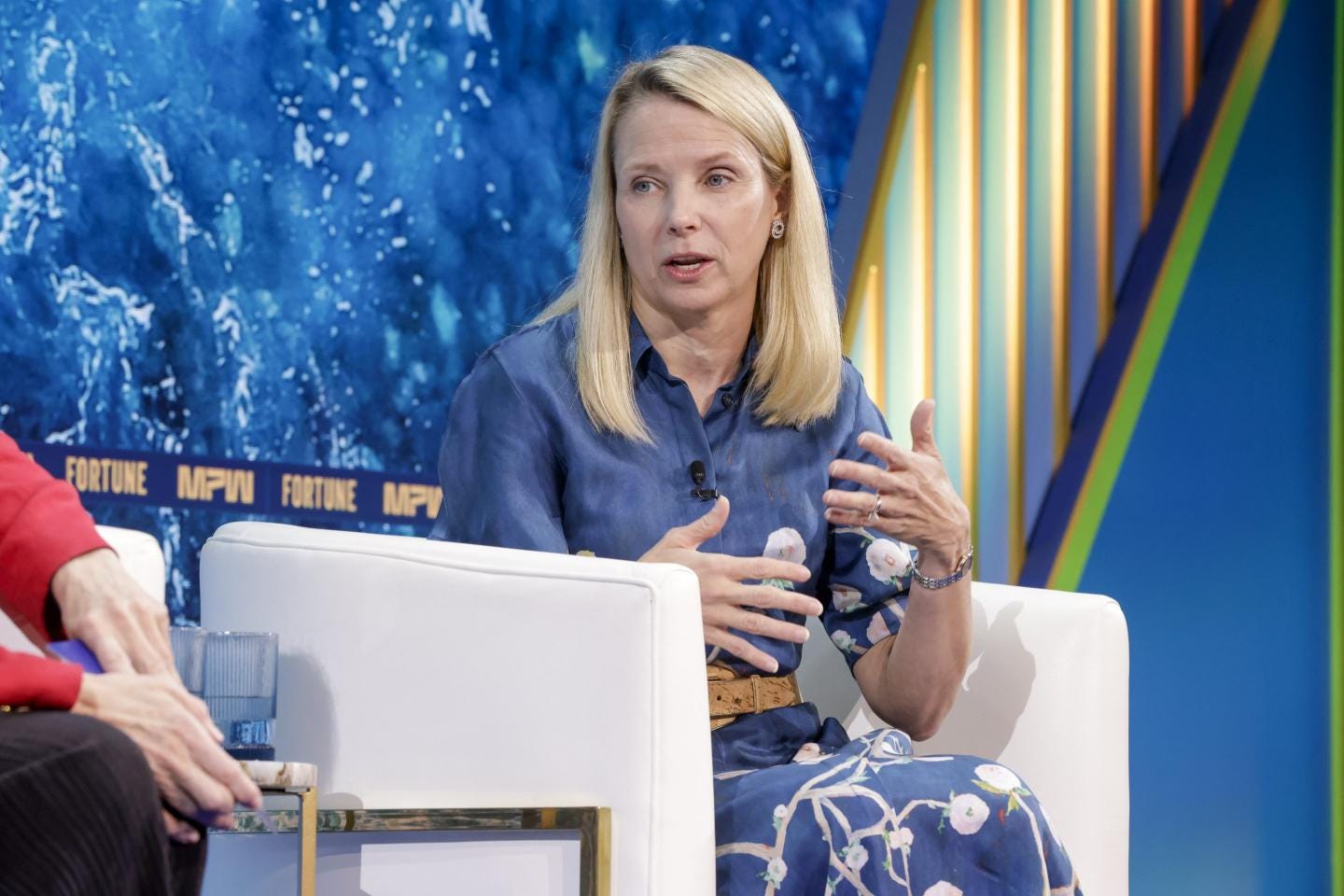
When we asked what comes next, Marissa’s biggest near-term idea is multiplayer: her assistant coordinating with her husband’s, her mom’s or her friends’ to pick a plan or send that Airbnb code without her involvement. She expects multimodal and multiplayer assistants to work at scale within the next year. She also notes that an agent spoiled a surprise party just last week.
Further out, she sees wearables and even implants, where Dazzle’s technology could pick out the moments that mattered from the millions of frames smart glasses capture each day. She cites investor Mark Pincus’s Life at the Speed of Play:
“Things that have intention and attention… translate those into action.”
From her board seats, she says AI is now at the top of every boardroom agenda. Companies that once found 25% AI-written code intimidating are now nearing 90% to 100%. That puts product taste at the center.
“Hard and long are no longer necessarily the constraints. So it really becomes what to build.”
Where to connect with us
Follow Ollie on LinkedIn: https://www.linkedin.com/in/ollieforsyth
Follow Marissa on LinkedIn: https://www.linkedin.com/in/marissamayer
Visit Dazzle: https://dazzle.ai
Previous episodes include


See all previous episodes here 👉
Our partners:
Prelint: Keeps every decision reviewed, recorded, and traceable. Head over to Prelint to learn more.
VCX: The public ticker for private tech. Head over to GetVCX.com to learn more.