

Subscribe to stay ahead of technology trends. Never miss future editions.

Cameron Adams, co-founder and Chief Product Officer at Canva, joins NEW ECONOMIES to explain why AI gives creators more options than ever but not more chances to send the right message, and why taste becomes the real opportunity once every tool produces passable designs.
Watch now: Cameron Adams - Co-Founder at Canva
We also get into the contrarian bet behind Canva’s early success - ignoring The Lean Startup playbook to spend six extra months on user testing before launch, plus where AI is actually moving inside the product, from Canva AI 2.0 to magic layers to voice as the next creative interface.
We close on the fourteen-year journey of co-founding Canva with Melanie Perkins and Cliff Obrecht, and what Cam thinks creators should be focusing on going forward.
Watch or listen now on YouTube, Apple Podcasts, Spotify, and X
Download the transcript

Timestamps
(00:00) Meet Cameron Adams
(02:06) Canva Create 2.0
(05:13) The Canva Founding Story
(07:45) Canva's First 6–12 Months
(09:45) Building Fanatical Early Users
(11:37) Landing the First Users
(15:35) How Canva Stays Relevant
(17:03) Canva's Focus on AI
(19:50) Taste Is the New Differentiator
(21:46) What Design Platforms Do Best Today
(25:24) Canva's Most Popular Features
(27:04) Inside Canva's Product Roadmap
(34:05) What Creators Should Focus On
(36:35) What Cam Is Most Excited About
(38:25) AI-Generated Content
(42:22) Why Music Is the Next Big Trend
(46:10) Anyone Can Build Now
(49:12) Cam's AI Stack
(50:34) Ollie Joins as Cam's Chief of Staff
(51:28) Co-Founder Relationships
(56:00) What's Next for Canva
Our notes from this conversation
AI gives you more options, not more chances.
You can now generate ten, twenty, thirty plus versions of anything using these AI tools, but the audience still only lets you send one message, maybe two at most. Cam’s take: the volume of options AI produces doesn’t lower the stakes of choosing correctly, it raises them. Great taste matters more than ever.
The moat isn’t the model, it’s the product workflow around it.
One prompt box spitting out one image is table stakes now - anyone can do it. Canva’s edge comes from pulling teams, brand context, and every stage of a project into a single loop, which is why a quarter of a billion people bring their colleagues, friends, and family into the suite of product offerings with them.
Ignoring conventional wisdom was the actual growth hack.
Investors were pushing Canva to ship fast per the famous playbook: The Lean Startup by Eric Ries. They spent six extra months on user testing instead, betting that a polished first experience would turn users into fanatical fans. Cam believes that patience became Canva’s early advantage. By delaying launch until the experience felt polished, the team laid the foundations for Canva’s organic growth loop.
Voice is the next interface opportunity.
Cam points to Africa as a voice-first market by necessity, places where typing was never the default way people interacted with technology. Whoever wins on voice interfaces wins access to users that keyboard-first products never reached. The death of the keyboard may be looming.
Fully AI-generated content plateaus. AI-assisted creators don’t.
AI Micro-dramas out of China are going viral on the strength of human storytelling, not the fact that they’re AI-made. Cam’s bet: pure AI-generated content is a novelty that settles into a niche, while creators who use AI to extend their own taste keep compounding.
Velocity and quality aren’t in tension anymore, they’re the same discipline.
Canva mapped every feature shipped over the previous three months and found it had delivered more product output than at any point in the company’s fourteen-year history. Cam’s explanation isn’t “we cut corners” - it’s that better internal tools let designers and engineers prototype more ideas and still nail the one that ships.
Fourteen-year co-founder relationships survive on self-awareness, as well as chemistry.
Cam’s answer to what makes Canva’s founding team last isn’t just the shared vision, it’s each person knowing precisely what they’re great at, what they’re not, and staying a well-rounded contributor instead of hiding in one fixed lane. That’s what let three people cover for each other for over a decade without competing for the same territory.
Links
Follow Ollie on X: https://x.com/ollieforsyth
Follow Cameron on X: https://x.com/themaninblue
Sign up to Canva: https://www.canva.com
Listen to all previous episodes: https://www.neweconomies.co/podcast
Subscribe to Cam's newsletter: https://promptedwithcam.substack.com/
Subscribe to Cam's podcast: https://www.youtube.com/playlist?list=PLATYfhN6gQz_ynkjnu_d63u1Qp600SlBH
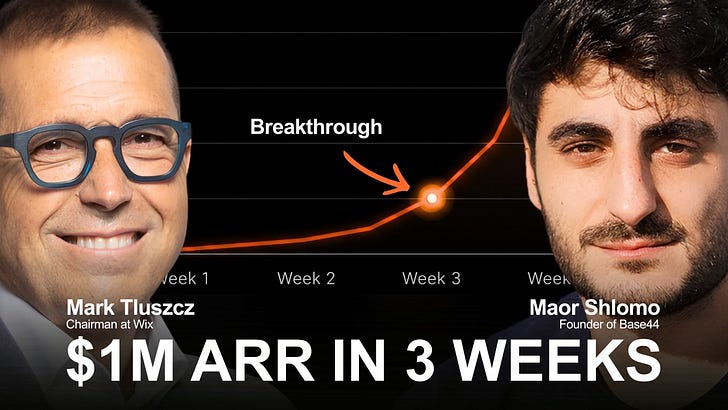
Previous episodes include


If you enjoyed this episode, help sustain our work by clicking ❤️ and 🔄 at the top of this post.
…..
Brought to you by Harmonic - The complete startup database.